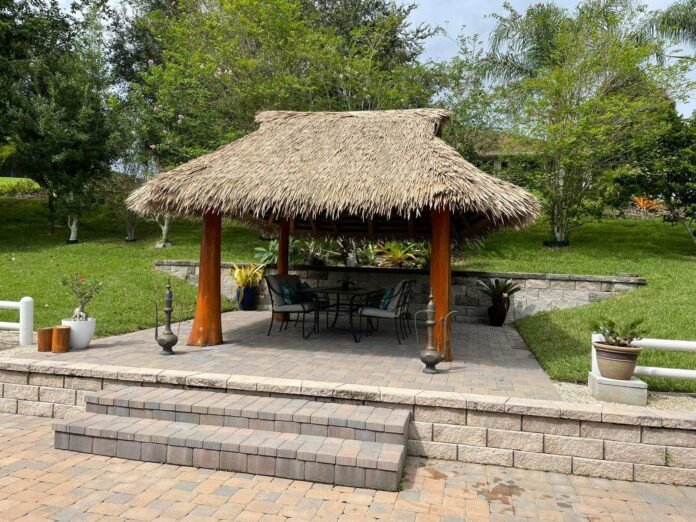
Synthetic thatch roofing is known for creating warm, tropical, and nature-inspired spaces. It is widely used in resorts, gazebos, villas, restaurants, poolside cabanas, theme parks, farm stays, and outdoor hospitality projects. However, the final appearance of a synthetic thatch roof depends on more than the colour or style of the thatch itself.
The shape and slope of the roof play an equally important role.
The same synthetic thatch material can look completely different when installed on a hip roof, conical roof, pyramid roof, curved roof, or gable roof. Some roof shapes create a bold and luxurious appearance, while others feel simple, traditional, modern, or highly decorative.
Roof slope also affects how thick and layered the synthetic thatch appears. A steep roof exposes more of the thatch surface, creating a fuller and more dramatic look. A low-slope roof may appear flatter and more contemporary but requires careful planning for drainage and visual coverage.
Understanding how roof shape influences the final design can help architects, resort owners, developers, and homeowners choose a roofing style that suits both the building and the overall project theme.
In this blog, we explore the most popular roof shapes used with synthetic thatch and explain how roof slope, overhang, layering, and edge design influence the finished appearance.
Why Roof Shape Matters in Synthetic Thatch Design
When people look at a thatched structure, they usually notice the overall roof form before they notice individual thatch pieces. The height, angle, curves, edges, and proportions create the first visual impression.
A well-designed roof can make a small gazebo feel elegant and spacious. It can turn a simple restaurant into a tropical destination or give a resort entrance a strong architectural identity.
Roof shape influences:
- The overall style of the structure
- How much of the synthetic thatch is visible
- The apparent thickness of the roof
- The way light and shadow fall across the surface
- Rainwater drainage
- The size and appearance of roof overhangs
- The design of ridges, corners, and edges
- The visual height of the building
The roof should therefore be selected as part of the overall architectural design rather than simply as a surface to be covered with synthetic thatch.
1. Hip Roofs: Balanced, Elegant, and Versatile
A hip roof slopes downward on all sides of the structure. Instead of having vertical triangular walls at the ends, all roof sections meet at ridges or a central upper section.
Hip roofs are commonly used for:
- Resort villas
- Outdoor restaurants
- Poolside pavilions
- Large gazebos
- Reception buildings
- Garden structures
When covered with synthetic thatch, a hip roof creates a balanced and complete appearance because the thatch is visible from every direction.
The sloping surfaces allow the layered texture to become a major part of the building’s design. Wide overhangs can make the roof appear thicker and more luxurious while providing additional shade around the structure.
Visual Character of a Synthetic Thatch Hip Roof
A hip roof generally creates a look that feels:
- Balanced
- Elegant
- Traditional
- Welcoming
- Suitable for large structures
Because there are no large vertical gable ends, the thatch creates a continuous visual flow around the building.
Hip roofs work well in hospitality projects where the structure may be viewed from multiple directions. A centrally located resort pavilion, for example, can maintain an attractive appearance from every side.
2. Conical Roofs: Iconic and Highly Recognisable
A conical roof has a circular base and rises toward a single central point. It is one of the most recognisable roof shapes used in tropical and resort-style architecture.
Conical synthetic thatch roofs are often used for:
- Round gazebos
- Poolside cabanas
- Beach bars
- Resort seating areas
- Garden huts
- Outdoor dining pods
- Entrance structures
The circular shape creates a smooth visual flow, while the pointed centre gives the structure height and character.
Synthetic thatch follows the roof around the entire structure, creating a layered appearance without large flat sections. When the roof has a suitable slope, the thatch appears dense, full, and highly textured.
Why Conical Roofs Work Well with Synthetic Thatch
Conical roofs naturally draw attention. Their shape is different from conventional residential roofing, making them ideal for feature structures and themed environments.
The design can create:
- A strong tropical identity
- A relaxed island-inspired atmosphere
- A memorable visual landmark
- A sense of height in small structures
- An attractive appearance from every direction
A conical roof can make even a compact gazebo feel distinctive. For this reason, it is frequently used around swimming pools, landscaped gardens, and resort recreation areas.
The upper point and lower roof edge require careful finishing to maintain a clean and professional appearance.
3. Pyramid Roofs: Symmetrical and Visually Striking
A pyramid roof usually has four triangular sloping sides that meet at a single point. It is similar to a hip roof but does not have a long central ridge.
This roof shape is popular for:
- Square gazebos
- Poolside cabanas
- Resort dining pavilions
- Outdoor lounges
- Garden seating structures
- Entrance canopies
Synthetic thatch gives pyramid roofs a bold and symmetrical appearance. The lines naturally guide the eye upward toward the central peak, making the structure appear taller.
Visual Benefits of Pyramid Roofs
Pyramid roofs create:
- Strong symmetry
- A clear central focal point
- A neat and balanced appearance
- Visible thatch texture on every side
- A distinctive resort-style character
Because all roof sections meet at one point, the final appearance depends heavily on accurate installation. The corners should be properly aligned, and the top should have a neat finish.
Wide overhangs can add depth to the roof and make the synthetic thatch appear fuller. This style works especially well for standalone structures surrounded by landscaping or open space.
4. Curved Roofs: Organic, Modern, and Creative
Curved roofs move away from traditional straight rooflines. They may have gentle arches, wave-like forms, rounded edges, or custom architectural shapes.
Synthetic thatch installed on a curved roof can create a softer and more organic appearance. The flowing shape complements the natural texture of thatch and allows designers to create structures that feel connected to the surrounding landscape.
Curved synthetic thatch roofs may be used for:
- Luxury resorts
- Eco-retreats
- Wellness centres
- Spa pavilions
- Themed restaurants
- Resort entrances
- Custom outdoor lounges
The Visual Impact of Curved Synthetic Thatch
Curved roofs can feel:
- Natural and flowing
- Contemporary
- Artistic
- Premium
- Highly customised
The changing roof angle creates different patterns of light and shadow throughout the day. This can make the texture of synthetic thatch appear more dynamic.
Curved roofs require careful design because the thatch must follow the shape smoothly. The supporting framework, product flexibility, installation pattern, and drainage should all be considered during the planning stage.
When designed and installed correctly, a curved synthetic thatch roof can become a signature architectural feature.
5. Gable Roofs: Simple, Familiar, and Practical
A gable roof has two sloping sides that meet along a central ridge. The ends of the structure form triangular walls known as gables.
This is one of the most familiar roof shapes and is commonly used for:
- Resort cottages
- Villas
- Farm stays
- Outdoor restaurants
- Entrance structures
- Rustic cafés
- Large dining pavilions
Synthetic thatch can soften the simple geometry of a gable roof and give it a warmer, more natural appearance.
Visual Character of a Gable Synthetic Thatch Roof
Gable roofs generally create a style that feels:
- Traditional
- Simple
- Rustic
- Spacious
- Suitable for larger buildings
The long sloping surfaces provide enough space to display the layered texture of synthetic thatch. A steep gable roof can create a bold tropical appearance, while a lower slope may feel cleaner and more contemporary.
The triangular gable ends can also be decorated with artificial bamboo, timber-style panels, stone finishes, glass, or resort signage.
The central ridge is an important visual feature and should be finished carefully to create a neat transition between the two roof surfaces.
Comparing Popular Roof Shapes for Synthetic Thatch
| Roof Shape | Visual Style and Common Applications |
| Hip Roof | Balanced and elegant; ideal for resort villas, restaurants, reception buildings, and large pavilions |
| Conical Roof | Tropical and highly recognisable; suitable for round gazebos, beach bars, cabanas, and garden huts |
| Pyramid Roof | Symmetrical and visually striking; popular for square gazebos, poolside lounges, and standalone pavilions |
| Curved Roof | Organic and contemporary; suitable for luxury resorts, spas, themed restaurants, and custom structures |
| Gable Roof | Simple and traditional; ideal for cottages, farm stays, villas, cafés, and large dining areas |
There is no single roof shape that is best for every synthetic thatch project. The right choice depends on the size of the structure, architectural theme, location, budget, and desired visual impact.
How Roof Slope Changes the Appearance of Synthetic Thatch
Roof slope refers to how steep or flat a roof is. It has a major influence on both the appearance and performance of synthetic thatch roofing.
On a steep roof, more of the thatch-covered surface is visible from ground level. The overlapping layers create stronger shadows, making the roof appear thicker and more textured.
A low-slope roof may expose less of the thatch surface to people standing nearby. As a result, the roof may appear flatter and less dramatic.
Steeper Roof Slopes Can Create:
- A fuller and more layered appearance
- Greater visual height
- Stronger tropical character
- More visible texture
- More dramatic shadows
- Faster rainwater movement
Lower Roof Slopes Can Create:
- A cleaner and more contemporary appearance
- A lower overall building profile
- Less visible roof texture from ground level
- A wider and more horizontal visual style
The correct slope should not be selected based on appearance alone. Rainfall, drainage, wind exposure, roof dimensions, product specifications, and installation requirements must also be considered.
How Roof Slope Affects the Perceived Thickness of Thatch
One interesting feature of synthetic thatch is that its visual thickness can change depending on the viewing angle.
On steep roofs, the layered ends are more visible. This creates deeper shadows and makes the roof look dense and full. The roof may appear to have a thick natural edge even when the installation system remains lightweight.
On low-slope roofs, people may see more of the upper roof surface and less of the layered edge. This can make the same material appear thinner.
The final appearance is influenced by:
- Roof slope
- Number of visible layers
- Spacing between thatch units
- Length of the thatch profile
- Roof overhang
- Viewing distance
- Height of the structure
Designers should consider how guests will view the roof. A roof seen from below may require a different visual approach from a rooftop structure viewed from nearby upper floors.
The Importance of Roof Overhangs
Roof overhangs are the sections that extend beyond the supporting walls or columns. They can significantly influence the appearance of synthetic thatch roofing.
A wide overhang can:
- Make the roof appear larger
- Create a deeper and more luxurious edge
- Provide additional shade
- Protect open seating areas
- Emphasise the layered thatch texture
Shorter overhangs create a more compact and structured appearance.
For resorts and hospitality spaces, wide thatched overhangs are often used to create shaded walkways, comfortable seating areas, and a strong tropical character.
The overhang should still be designed according to structural requirements, local wind conditions, and the dimensions of the building.
Roof Edges, Corners, and Ridge Finishing
Small finishing details can have a major impact on the final appearance of synthetic thatch roofing.
The roof edge is often the most visible part of the installation. A well-layered edge can make the roof appear natural, full, and professionally finished.
Important details include:
- Consistent edge thickness
- Even layering
- Clean corner transitions
- Proper ridge finishing
- Neat treatment around roof peaks
- Secure fastening in exposed areas
Hip roofs require careful corner detailing. Pyramid and conical roofs need clean finishing at the top. Gable roofs require proper ridge treatment, while curved roofs need smooth transitions across changing angles.
Good finishing helps the entire roof feel complete and visually balanced.
Choosing the Right Roof Shape for Different Projects
Different projects require different roof styles.
For Resort Villas
Hip and gable roofs often work well because they can cover larger structures while creating a balanced appearance.
For Poolside Cabanas
Conical and pyramid roofs create a distinctive tropical look and help individual cabanas stand out.
For Restaurants
Hip or gable roofs can provide wide covered dining areas, while curved roofs may create a more premium architectural identity.
For Gazebos
Pyramid and conical roofs are popular because their symmetry suits standalone structures.
For Resort Entrances
Large hip, curved, or custom synthetic thatch roofs can create a memorable first impression.
For Eco-Retreats and Farm Stays
Gable roofs often support a simple, rustic character, while curved designs can create a more organic connection with the landscape.
Final Thoughts
The final appearance of synthetic thatch roofing depends on much more than the material itself. Roof shape, slope, height, overhang, layering, corners, and ridge details all influence how the finished structure looks.
Hip roofs create balance and elegance. Conical roofs offer an iconic tropical character. Pyramid roofs provide symmetry and visual height. Curved roofs support creative and organic architecture, while gable roofs deliver a familiar and versatile appearance.
Roof slope is equally important. Steeper slopes generally make synthetic thatch appear fuller, thicker, and more dramatic, while lower slopes can create a cleaner and more contemporary look.
The best roof design should balance visual appeal with practical requirements such as drainage, wind exposure, structural capacity, weather conditions, and installation guidelines.
When the right roof shape is combined with high-quality synthetic thatch and professional installation, the result can become more than a roofing system. It can become the defining architectural feature of the entire project.
Create Distinctive Synthetic Thatch Roofs with KHW Solutions
KHW Solutions Pvt. Ltd. offers premium synthetic thatch roofing solutions for resorts, villas, restaurants, gazebos, poolside cabanas, reception pavilions, farm stays, and hospitality projects.
Our synthetic thatch solutions are available in different styles to complement hip roofs, conical roofs, pyramid roofs, curved roofs, gable roofs, and customised architectural structures.
Contact KHW Solutions today for expert product guidance and a customised quotation for your synthetic thatch roofing project.