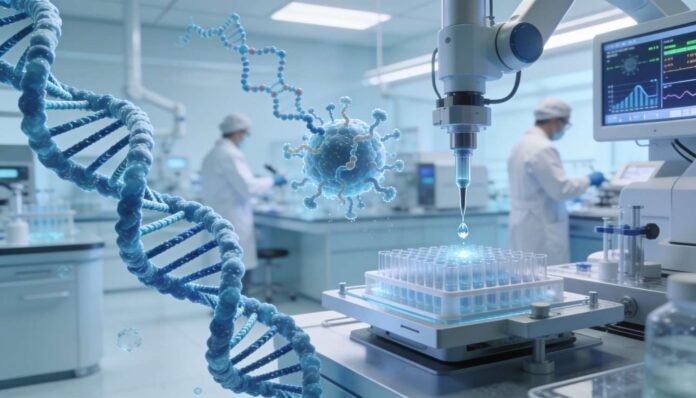
A single sequence of nucleotides can now shape the future of medicine, diagnostics, and synthetic biology. What once required years of trial and error in laboratories is now being accelerated by highly accurate molecular engineering solutions. Among these, dna synthesis services are playing a foundational role in enabling scientists to build, modify, and study genetic material with remarkable precision.
At the same time, innovations like mrna synthesis are revolutionizing how proteins are expressed and how new therapeutic strategies are developed in modern biomedical research.
These technologies are not just tools—they are the backbone of next-generation life science breakthroughs.
The Rising Demand for Precision in Genetic Engineering
Biotechnology has entered an era where accuracy defines success. Whether it is gene editing, vaccine development, or synthetic biology, researchers require highly reliable DNA and RNA sequences to ensure consistent results.
This is where dna synthesis services become critical. They allow scientists to design custom oligonucleotides that match exact experimental requirements. These sequences are used in cloning, PCR assays, gene editing systems like CRISPR, and diagnostic research.
With increasing complexity in research models, dna synthesis services are now essential for both academic institutions and pharmaceutical companies aiming to accelerate discovery timelines.
How DNA Synthesis is Transforming Research Workflows
Traditional DNA preparation methods often involved time-consuming cloning steps and natural extraction processes. Today, synthetic approaches have eliminated many of these barriers.
Modern dna synthesis services enable rapid production of high-fidelity sequences with modifications such as fluorescent tags, phosphorylation, or mutation-specific designs. This flexibility has significantly improved research efficiency and reduced experimental variability.
According to insights shared companies that adopt advanced molecular tools experience faster development cycles and improved scalability in product pipelines.
These advantages make synthetic DNA a key driver of innovation in genomics, diagnostics, and therapeutic development.
The Expanding Role of mRNA in Biotechnology
In recent years, mRNA-based technologies have gained global attention due to their role in vaccine development and gene therapy. Unlike traditional protein-based methods, mRNA delivers genetic instructions directly into cells, enabling them to produce target proteins efficiently.
This is where mrna synthesis becomes essential. It allows researchers to generate high-quality messenger RNA sequences in vitro, ensuring stability and effectiveness for experimental and therapeutic applications.
mrna synthesis is widely used in vaccine research, cancer immunotherapy, and protein expression studies. Its ability to produce rapid and scalable biological responses has made it one of the most promising tools in modern medicine.
Applications Across Biomedical and Pharmaceutical Fields
The combination of dna synthesis services and mrna synthesis is reshaping how researchers approach complex biological challenges. These technologies are widely used in:
- Genetic research and gene function studies
- Vaccine and immunotherapy development
- CRISPR gene editing systems
- Protein expression and structural biology
- Diagnostic assay development
In many advanced laboratories, synthetic DNA is used as a template for mRNA production, creating a seamless workflow from genetic design to protein expression.
This integration enhances experimental accuracy and reduces development time significantly.
Accelerating Drug Discovery and Therapeutic Innovation
The pharmaceutical industry is under constant pressure to develop safer, faster, and more targeted therapies. Molecular synthesis technologies are helping meet these demands by simplifying early-stage research.
dna synthesis services allow researchers to quickly design and test genetic constructs, while mrna synthesis enables rapid protein expression for functional validation.
Together, these tools streamline drug discovery pipelines, reduce costs, and improve reproducibility in clinical research. They also support the growing trend of personalized medicine, where treatments are tailored to individual genetic profiles.
Why Genetic Synthesis Matters for the Future of Medicine
As global healthcare challenges become more complex, the need for precise and scalable molecular tools is increasing. DNA and RNA synthesis technologies are expected to play a central role in shaping future diagnostics and therapeutics.
The ability to design genetic material with accuracy opens doors to treatments that were previously impossible. From rare genetic disorders to emerging infectious diseases, these technologies provide the foundation for rapid scientific response.
Building the Future Through Molecular Precision
The evolution of biotechnology is deeply connected to advancements in genetic engineering tools. Solutions like dna synthesis services and mrna synthesis are empowering researchers to move beyond traditional limitations and explore new scientific possibilities.
As demand for precision medicine and advanced therapeutics continues to grow, these technologies will remain at the core of innovation. Organizations that invest in reliable molecular synthesis solutions today are positioning themselves at the forefront of tomorrow’s scientific breakthroughs.