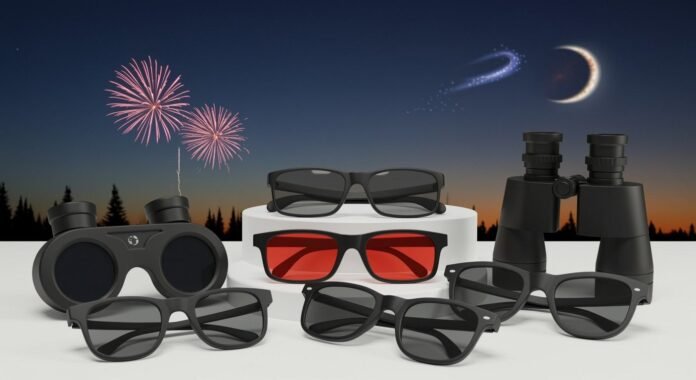
The ability to manipulate light is the foundation of modern entertainment, scientific observation, and celestial safety. Whether you are immersed in a high-definition 3D blockbuster or witnessing a rare celestial alignment, the quality of the lens between your eyes and the subject determines the entire experience. High-performance Circular Polarized Glasses represent the pinnacle of this optical manipulation, allowing for a ghost-free, flicker-less 3D experience that mimics how the human eye naturally perceives depth. By utilizing specialized filters that spiral light in opposite directions for each eye, these optics ensure that every detail remains sharp, vibrant, and perfectly aligned with the director’s vision.
The Evolution of Passive 3D Technology
Before the dominance of modern digital cinema, the industry relied heavily on simpler methods to create depth. These methods were largely divided into two categories: linear and circular polarization. While Linear Polarized Glasses were revolutionary for their time, they required the viewer to keep their head perfectly level to maintain the 3D effect. Any slight tilt would result in “crosstalk” or double images.
Modern advancements have largely solved this by shifting toward circular polarization, which allows for greater head movement without losing the three-dimensional illusion. This transition has made high-quality eyewear a staple for theme parks, home theaters, and professional flight simulators. The precision required to manufacture these filters ensures that the light transmission remains high while maintaining a strict extinction ratio to keep the left and right images completely separate.
Heritage in Optical Innovation and Manufacturing
Ruida Optoelectronics Technology Co.,Ltd, established in year 1996, with an area of 14,800 square meters, is located in the optical & electronic development zone in Jingzhou, Hubei province, China. It is actually the former Hubei Shashi Optical Instruments factory, well known for its high quality optical lenses such as “90mm cinema lens”, “103 deformed cinema lens” in 1990s and its interesting anaglyph glasses and eyewear.
This legacy of lens manufacturing is evident in the production of specialized Red Cyan Glasses, which continue to be a cost-effective and versatile solution for 3D printing, comic books, and educational materials. Unlike electronic active-shutter systems, these passive anaglyph optics require no batteries and work on any standard screen or printed surface, making them the preferred choice for mass-audience distributions and classroom environments.
Safety and Brilliance: Specialized Event Eyewear
Beyond the cinema, optical technology plays a vital role in public safety and event celebration. When a solar event occurs, the intensity of the sun’s rays can cause permanent retinal damage in seconds if viewed through standard sunglasses. Certified 3D Solar Eclipse Glasses utilize advanced solar filters that block 99.99% of visible light and 100% of harmful ultraviolet and infrared radiation. These are not merely accessories; they are high-precision safety devices that allow enthusiasts to witness the majesty of the cosmos without risking their eyesight.
Similarly, the world of pyrotechnics has been transformed by the introduction of 3D Fireworks Glasses. These lenses use micro-gratings to diffract light into kaleidoscopic patterns, turning a standard firework display into a spectacular burst of rainbows and geometric shapes. According to Entrepreneur, the niche market for “experience-enhancing” eyewear has seen significant growth as event organizers look for new ways to provide immersive value to their attendees.
Portability in Observation: The Rise of Disposable Optics
In the realm of outdoor observation and mass-scale events, bulkiness is often the enemy of convenience. Traditional binoculars are heavy and expensive, making them impractical for one-time use at a stadium or a nature retreat. The development of Disposable Binoculars/Telescopes has filled this gap perfectly. These units are made from high-strength cardboard and precision-molded plastic lenses, offering 3x to 6x magnification in a flat-folding design that fits in a pocket. They represent the perfect intersection of optical physics and industrial design, providing clear views at a fraction of the cost of traditional gear.
Maintaining Quality Standards in Mass Production
The primary challenge in manufacturing disposable or mass-distributed eyewear is maintaining a consistent optical center. Even in a cardboard frame, the lenses must be perfectly aligned to prevent eye strain and headaches. This requires sophisticated automated assembly lines and rigorous quality control protocols. By adhering to international safety standards, manufacturers ensure that even the most affordable pair of glasses provides a sharp, clear, and safe viewing experience for the end-user.
A Clearer Vision for the Future
Optical technology is the silent bridge between our eyes and the wonders of the world, whether those wonders are digital, celestial, or pyrotechnic. From the professional-grade filters used in modern cinemas to the safety-certified lenses used for astronomical observation, the commitment to quality remains the same. By choosing eyewear backed by decades of optical heritage and modern manufacturing precision, you ensure that every visual moment is captured with total clarity. Whether you are looking to scale a massive event or simply enhance your personal viewing experience, the right lens makes all the difference. Discover the brilliance of precision optics and see the world in a whole new dimension.